


Signal Transmission
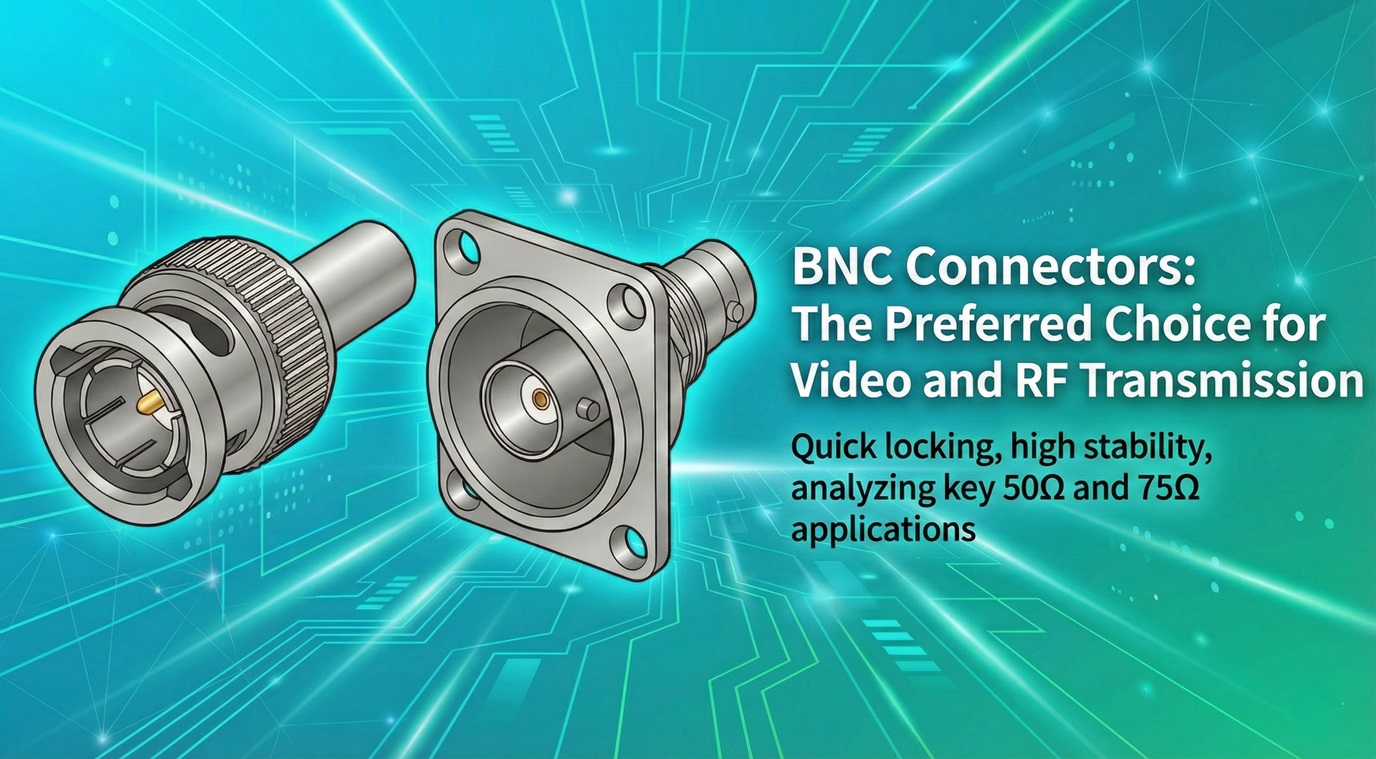
The BNC (Bayonet Neill–Concelman) connector is one of the most common and versatile coaxial cable connectors in the industry. Renowned for its unique bayonet locking mechanism, it provides a quick, secure, and reliable connection, making it an indispensable component in video surveillance, radio frequency (RF) communications, and test instrumentation.
What is a BNC Connector?
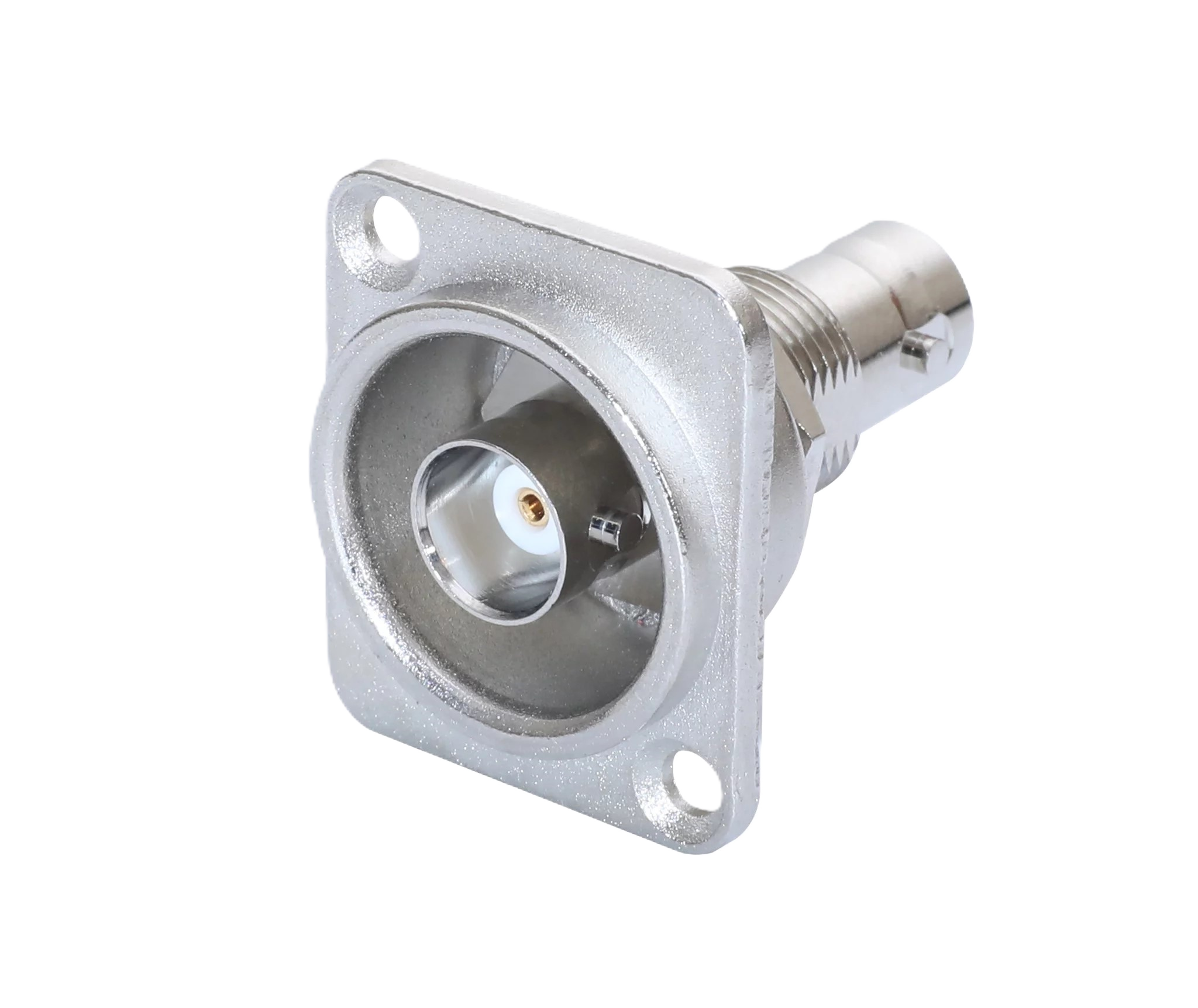
The BNC connector is a miniature quick-connect/disconnect radio frequency connector used for coaxial cables. It is named after its inventors, Paul Neill and Carl Concelman, and its bayonet-style locking design.
📌 Key Features
- Bayonet Locking Mechanism: This is the defining feature of the BNC. It connects with a simple quarter-turn of the coupling nut. This allows for extremely fast connection and disconnection while preventing accidental disengagement due to vibration or impact.
- Constant Impedance: BNC connectors are designed to match the characteristic impedance of the cable (usually 50Ω or 75Ω), which minimizes signal reflection and loss, ensuring signal integrity.
- Wide Frequency Range: They typically support frequencies up to 4 GHz (though most commonly used below 1GHz for standard applications).
The Two Main Impedance Types
BNC connectors generally come in two impedance specifications, each serving different industries:
| Specification | Impedance | Typical Applications |
|---|---|---|
| 50 Ohm (50Ω) | 50 Ω | RF transmission, wireless communication systems, data networks (legacy 10Base-2 Ethernet), and test & measurement equipment. |
| 75 Ohm (75Ω) | 75 Ω | Video signal transmission, CCTV surveillance, broadcast equipment, and High-Definition Serial Digital Interface (HD/SD-SDI). |
Important Note: While 50Ω and 75Ω BNC connectors look similar and can physically mate, it is best not to mix them. Mismatching the impedance between the cable and the connector can cause signal reflection (VSWR), leading to signal attenuation and ghosting, especially at higher frequencies.
🌐 Major Applications of BNC Connectors
Due to their reliability, ease of use, and excellent high-frequency performance, BNC connectors play a vital role in modern electronics and communication systems:
- Video Surveillance (CCTV / Security)
- Primarily uses 75Ω BNC connectors.
- Used to transmit analog or digital video signals from cameras to DVRs (Digital Video Recorders) or monitors.
- Broadcast and Professional AV
- Primarily uses 75Ω BNC connectors.
- Standard in television studios and live event production for transmitting high-quality audio and video signals, such as HD-SDI.
- Test and Measurement
- Primarily uses 50Ω BNC connectors.
- The standard input/output interface for oscilloscopes, function generators, and spectrum analyzers, allowing engineers to quickly attach probes.
- Telecommunications
- Used in telecom infrastructure for connecting equipment, such as DS3 (T3) cross-connects.
- Legacy Networking
- Widely used in early 10Base-2 Ethernet networks, utilizing 50Ω BNC connectors with thin coaxial cables.
💡 BNC Variants and Related Connectors
Beyond the standard BNC, several variations exist to meet specific application requirements:
- BNC T-Connector: Used to split a single coaxial signal into two branches, common in older bus-topology networks.
- BNC Terminator: Used to cap unused BNC ports (usually a 50Ω or 75Ω resistor) to prevent signal reflection at the end of a cable run.
- TNC Connector (Threaded Neill-Concelman): A threaded version of the BNC. The screw-on design provides a more stable and low-noise connection in high-vibration environments and offers better performance at higher frequencies.
- Waterproof BNC (IP67/IP68): Designed for outdoor or harsh industrial environments, featuring gaskets to prevent moisture ingress.
Conclusion
With its quick-connect capability, robust design, and reliable signal transmission, the BNC connector remains the industry standard for many video and RF applications. Whether for daily security monitoring or high-precision laboratory testing, the BNC is the trusted link in your connection chain.


